Table of Contents
Toggle💡 Introduction
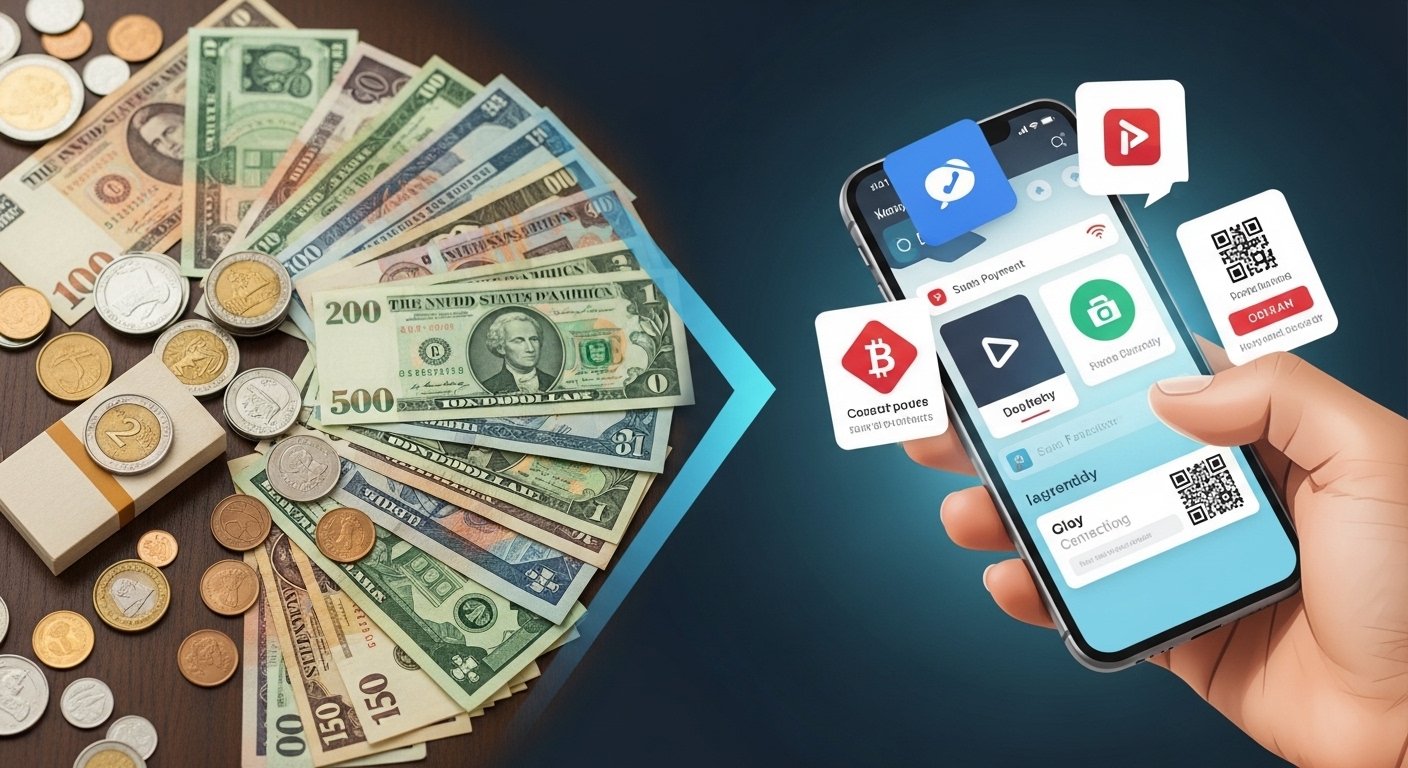
The global financial system is undergoing one of the biggest transformations in history. For centuries, physical cash has been the foundation of trade, but today digital payments are rapidly replacing it. From mobile apps to online banking, people are shifting toward faster and more convenient ways of handling money.
Platforms such as PayPal, Google Pay, and Apple Pay have made it possible to send and receive money instantly with just a smartphone. This has led many experts to ask an important question: Will we ever live in a completely cashless society where physical money disappears?
To understand this, we need to explore how digital payments work, why they are growing, and what challenges still exist.
🏦 What Is a Cashless Society?
A cashless society is an economic system where financial transactions are carried out digitally instead of using physical currency like coins and banknotes. In such a system, money exists electronically in bank accounts or payment applications.
Instead of carrying cash, people use:
- Mobile wallets
- Debit and credit cards
- Online banking platforms
- Contactless payment systems
Countries around the world are gradually moving toward this model as technology becomes more accessible and secure.
📱 The Rise of Digital Payment Systems
The rise of smartphones and internet connectivity has completely changed how people handle money. Digital payment platforms have become a normal part of daily life.
Apps like Google Pay and Apple Pay allow users to make payments instantly by tapping their phones. Similarly, PayPal enables secure global money transfers without needing physical cash.
This convenience is one of the biggest reasons cash usage is declining across the world.
🚀 Advantages of a Cashless Society
1️⃣ Speed and Convenience
Digital payments are much faster than traditional cash transactions. Users can complete payments in seconds without counting money or waiting for change.
https://play.11winners.pro/the-cashless-society-physical-money-disappear/
2️⃣ Better Security
Carrying cash comes with risks such as theft or loss. Digital payments reduce these risks by using encryption, authentication, and secure banking systems.
3️⃣ Easy Financial Tracking
Digital systems automatically record every transaction. Users can easily track their spending, savings, and budgets through apps.
4️⃣ Global Accessibility
With platforms like PayPal, people can send money internationally without visiting a bank. This has made global commerce much easier.
🌍 Countries Leading the Cashless Movement
Some countries are already highly advanced in adopting cashless systems:
- Sweden
- South Korea
- China
- United Kingdom (partially cashless in urban areas)
In these regions, digital payments are widely accepted in stores, transportation, and even small businesses.
🧠 Role of Technology in Cashless Systems
Technology is the backbone of the cashless revolution. Several innovations are driving this shift:
📶 Mobile Technology
Smartphones have become essential financial tools, allowing users to manage money anytime.
🔐 Encryption and Security Systems
Modern payment apps use advanced encryption to protect financial data.
🤖 Artificial Intelligence
AI is used to detect fraud, analyze spending habits, and improve user experience.
Companies like Google and Apple continue to invest heavily in these technologies.
⚠️ Challenges of a Cashless Society
Despite its benefits, a fully cashless world comes with several challenges.
🔐 Cybersecurity Risks
As digital transactions increase, so do cyberattacks and fraud attempts. Strong security systems are required to protect users.
📶 Dependence on Internet Access
Cashless systems rely on internet connectivity. In areas with poor infrastructure, digital payments may not be reliable.
🧓 Digital Exclusion
Not everyone is comfortable using smartphones or apps. Older individuals and rural populations may face difficulties adapting.
🔍 Privacy Concerns
Digital payments create data trails. Some users worry about how their financial data is stored and used.
💰 Will Physical Money Completely Disappear?
Even though digital payments are growing rapidly, it is unlikely that physical cash will disappear completely in the near future.
Cash still plays an important role in:
- Emergency situations
- Rural economies
- Small local businesses
- Privacy-focused transactions
Many experts believe the future will be a hybrid financial system, where both cash and digital payments coexist.
📊 The Impact on Businesses and Economy
The shift to cashless systems has also changed how businesses operate. Companies now prefer digital payment methods because they:
- Reduce cash handling costs
- Improve transaction speed
- Allow better financial tracking
- Enable global customer access
Platforms like Google Pay and Apple Pay have helped small businesses accept digital payments easily, even without expensive equipment.
🔮 The Future of Money
The future of money is expected to become even more digital and intelligent. Some key developments include:
💳 Central Bank Digital Currencies (CBDCs)
Governments are exploring digital versions of national currencies.
🌐 Cryptocurrency Growth
Digital currencies are becoming part of global financial discussions.
🤖 AI-Powered Banking
Artificial intelligence will manage budgets, investments, and fraud protection automatically.
📲 Fully Integrated Payment Ecosystems
Apps like PayPal will likely evolve into complete financial ecosystems.
🧾 Conclusion
The world is clearly moving toward a cashless future, driven by convenience, speed, and technology. Digital payment systems like Google Pay, Apple Pay, and PayPal are reshaping how people interact with money every day.
However, physical cash is unlikely to disappear completely. Instead, we are moving toward a hybrid financial system where both digital and physical money coexist.
The cashless revolution is not just about replacing money—it is about creating a faster, safer, and more connected global economy.